Depression in persons with disabilities is a serious challenge that often accompanies invisible psychological struggles. For many individuals with special needs, the transition to a life with limited mobility or sensory loss can lead to severe emotional distress. While society usually focuses on physical rehabilitation, mental resilience is the true foundation of a fulfilling life.
Understanding the Link Between Physical Disability and Depression
Developing depression in persons with disabilities often stems from a lack of accessibility and independence. When a person feels trapped by their environment — whether due to inaccessible buildings, limited transportation, or social isolation — hopelessness can set in gradually. Recognizing this connection is the first step toward breaking the cycle.
However, the rise of modern assistive technology has provided a new beacon of hope for overcoming depression in persons with disabilities.
How Assistive Technology Reduces Depression in Persons with Disabilities
Empowerment Through AI
Apps like Seeing AI enable visually impaired individuals to interpret the world around them — from reading printed documents to recognizing faces and identifying objects in real time. This kind of technology doesn’t just solve a practical problem; it restores a sense of control and directly targets depression in persons with disabilities.
Fostering Independence
Technological assistance acts as a digital companion, boosting confidence in daily activities and significantly reducing the psychological burden of dependency. When a person can accomplish tasks independently, self-worth naturally follows.
Everyday Assistive Tools That Make a Difference
Beyond apps like Seeing AI, a growing ecosystem of assistive technology is reshaping daily independence and tackling depression in persons with disabilities:
- Screen Readers and Voice Assistants: Tools like JAWS allow visually impaired users to browse the internet, send messages, and manage finances independently.
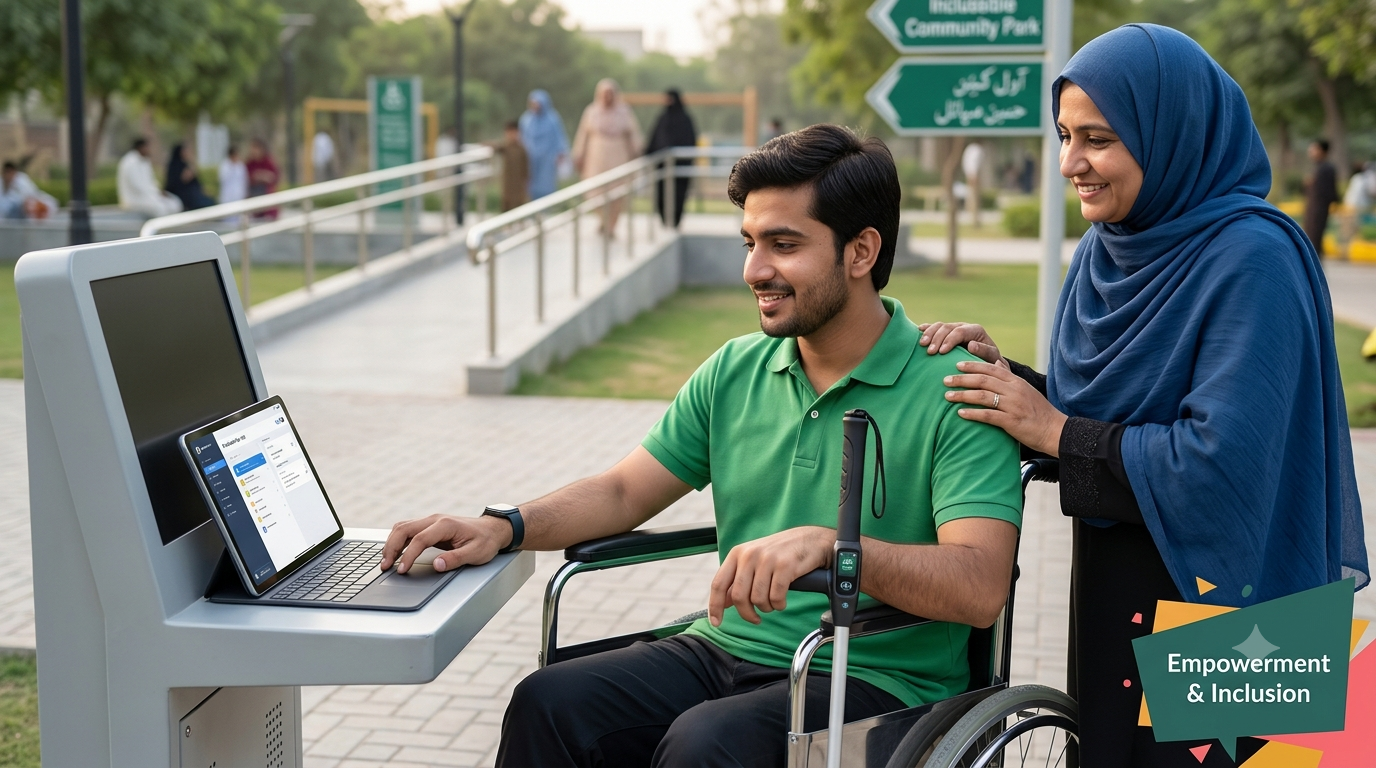
- Smart Mobility Aids: GPS-enabled wheelchairs or smart canes reduce the anxiety of navigating unfamiliar environments.
- Communication Technologies: Speech-to-text tools help individuals with speech or hearing impairments communicate more freely.
Each of these tools does more than solve a practical problem — they restore agency, which is one of the strongest protective factors against depression in persons with disabilities.
The Role of Family and Social Support
No recovery journey happens in isolation. Family members and caregivers play a critical role in either reinforcing hopelessness or nurturing resilience. Small shifts — like involving a person with a disability in decision-making, encouraging their independence rather than over-protecting them, and simply listening without judgment — can make a measurable difference in preventing depression in persons with disabilities.
Employers and educational institutions also share this responsibility. A workplace or classroom that accommodates physical needs sends a powerful message: your contribution matters, regardless of your physical condition.
5 Practical Strategies for Overcoming Depression in Persons with Disabilities
- Acknowledge Your Worth: Understand that your disability is part of your journey, not the end of your potential. Your value isn’t defined by physical limitations.
- Engage With Communities: Platforms like Voice of Special Person serve as vital spaces for advocacy and education, helping individuals fight depression in persons with disabilities by realizing they are not alone.
- Focus on Mental Hygiene: Just as you care for your physical body, practice mindfulness and seek professional help if negative thoughts become overwhelming.
- Set Small, Achievable Goals: Large life changes can feel overwhelming. Breaking recovery into small steps builds confidence sustainably.
- Celebrate Progress, Not Perfection: Recovery isn’t linear. Recognizing small wins helps sustain long-term motivation.
When to Seek Professional Help
While community support and assistive technology play a vital role, they are not substitutes for professional mental health care. If feelings of hopelessness persist for weeks, interfere with daily functioning, or are accompanied by thoughts of self-harm, it’s essential to reach out to a qualified psychologist, psychiatrist, or a trusted mental health helpline. Seeking help for depression in persons with disabilities is a sign of strength and self-respect.
Conclusion
Overcoming depression in persons with disabilities isn’t about ignoring the struggle — it’s about building the right support system through assistive technology, community, family, and professional care. Hope grows when independence and connection grow together. With the right tools and support, a fulfilling and purposeful life remains fully achievable.
Depression in persons with disabilities is a serious challenge that often accompanies invisible psychological struggles. For many individuals with special needs, the transition to a life with limited mobility or sensory loss can lead to severe emotional distress. While society usually focuses on physical rehabilitation, mental resilience is the true foundation of a fulfilling life.
Understanding the Link Between Physical Disability and Depression
Depression among PWDs often stems from a lack of accessibility and independence. When a person feels trapped by their environment — whether due to inaccessible buildings, limited transportation, or social isolation — hopelessness can set in gradually. Recognizing this connection is the first step toward breaking the cycle.
However, the rise of modern assistive technology has provided a new beacon of hope for millions of people living with physical disabilities.
How Assistive Technology Empowers Mental Health
Empowerment Through AI
Apps like Seeing AI enable visually impaired individuals to interpret the world around them — from reading printed documents to recognizing faces and identifying objects in real time. This kind of technology doesn’t just solve a practical problem; it restores a sense of control over daily life.
Fostering Independence
Technological assistance acts as a digital companion, boosting confidence in daily activities and significantly reducing the psychological burden of dependency. When a person can accomplish tasks independently, self-worth naturally follows.
Everyday Assistive Tools That Make a Difference
Beyond apps like Seeing AI, a growing ecosystem of assistive technology is reshaping daily independence for PWDs:
- Screen Readers and Voice Assistants: Tools like JAWS or built-in smartphone accessibility features allow visually impaired users to browse the internet, send messages, and manage finances independently.
- Smart Mobility Aids: GPS-enabled wheelchairs or smart canes reduce the anxiety of navigating unfamiliar environments.
- Communication Technologies: Speech-to-text and text-to-speech tools help individuals with speech or hearing impairments communicate more freely in both personal and professional settings.
Each of these tools does more than solve a practical problem — they restore agency, and agency is one of the strongest protective factors against depression.
The Role of Family and Social Support
No recovery journey happens in isolation. Family members and caregivers play a critical role in either reinforcing hopelessness or nurturing resilience. Small shifts — like involving a person with a disability in decision-making, encouraging their independence rather than over-protecting them, and simply listening without judgment — can make a measurable difference in mental health outcomes.
Employers and educational institutions also share this responsibility. A workplace or classroom that accommodates physical needs sends a powerful message: your contribution matters, regardless of your physical condition. This sense of belonging directly counters the isolation that often fuels depression in persons with disabilities.
5 Practical Strategies for Building Mental Resilience
- Acknowledge Your Worth: Understand that your disability is part of your journey, not the end of your potential. Your value isn’t defined by physical limitations.
- Engage With Communities: Platforms like Voice of Special Person serve as vital spaces for advocacy and education, helping individuals realize they are not alone in their journey. Connecting with others who share similar experiences reduces feelings of isolation significantly.
- Focus on Mental Hygiene: Just as you care for your physical body, practice mindfulness and seek professional help if negative thoughts become overwhelming. Mental health deserves the same attention as physical health.
- Set Small, Achievable Goals: Large life changes can feel overwhelming. Breaking recovery into small, manageable steps — learning one new assistive tool at a time — builds confidence gradually and sustainably.
- Celebrate Progress, Not Perfection: Recovery from depression isn’t linear. Some days will be harder than others. Recognizing small wins helps sustain long-term motivation.
When to Seek Professional Help
While community support and assistive technology play a vital role, they are not substitutes for professional mental health care. If feelings of hopelessness persist for weeks, interfere with daily functioning, or are accompanied by thoughts of self-harm, it’s essential to reach out to a qualified psychologist, psychiatrist, or a trusted mental health helpline. Seeking help is a sign of strength and self-respect.
Conclusion
Overcoming depression as a person with a physical disability isn’t about ignoring the struggle — it’s about building the right support system through assistive technology, community, family, and professional care. Hope grows when independence and connection grow together. With the right tools and support, a fulfilling and purposeful life remains fully achievable.
📌 Recommended Reading on Voice of Special Person: