Introduction:
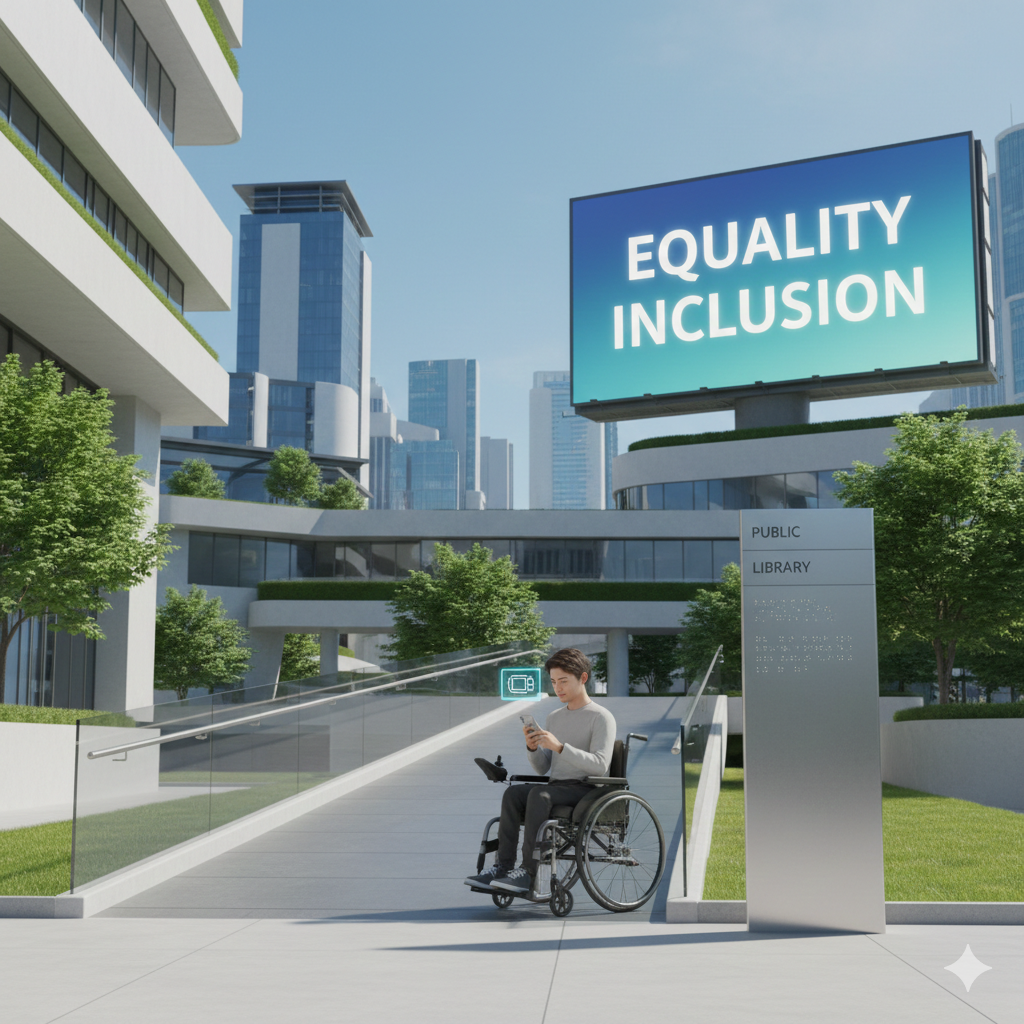
The third pillar of the Jakarta Declaration is “Accessibility.” Its primary goal is to foster an environment where disabilities do not hinder anyone’s ability to move freely or access information. When we talk about accessibility, it extends beyond simply installing ramps instead of stairs—it encompasses equitable access to the digital world as well.
Key Principles of Accessibility:
Physical Accessibility:
Design all public and private buildings, parks, and transportation systems according to “Universal Design” principles. This ensures that individuals using wheelchairs or those with visual impairments can travel independently and comfortably without needing assistance.
Digital Accessibility:
Make websites, mobile applications, and online educational resources compatible with screen readers and other assistive technologies so everyone can participate fully in the digital space.
Access to Information:
Provide essential information in sign language and Braille formats to ensure that deaf and visually impaired individuals stay informed and connected.
Conclusion:
Accessibility is not a matter of privilege; it is a fundamental human right. According to the Jakarta Declaration, our shared goal is to eliminate barriers across the Asia-Pacific region by 2032, creating an inclusive environment where everyone has equal opportunities to thrive.